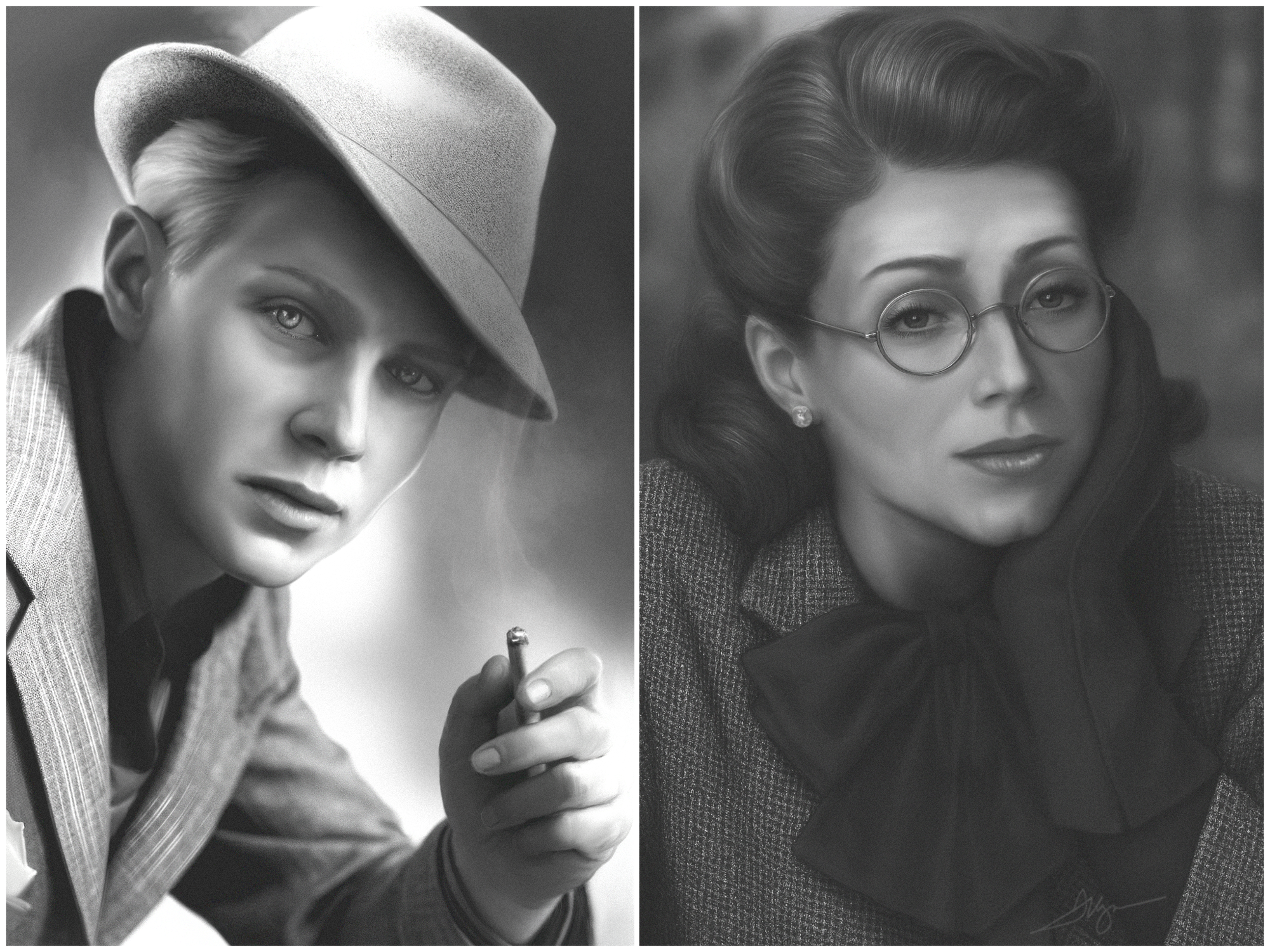
Chicago, 1935

The Velvet Trap

Where desire and damage tell the same lies

A queer literary historical novel

Enter the Trap
The Novel

Beneath the City.

Beyond the rules.

In 1935, Dr. Eleanor Wentworth holds rare authority as both a physician and a psychoanalyst. London-trained and established at the Chicago Institute for Psychoanalysis, she treats patients in a city where desire can move from diagnosis to evidence, while her lavender marriage and professional standing keep her hidden.

Her oldest friend, Vivian Moreau, owns the Velvet Trap, a club beneath a commercial laundry. When Edith “Eddie” Langley goes too far in one of its rooms, Vivian sends her to Eleanor for treatment. Eddie is a young reporter from a working-class Catholic family, dutiful at Mass but defiant in trousers downtown.

Eleanor and Eddie begin treatment already fluent in false identities and disavowed pleasure. Eleanor believes she can contain what the Velvet Trap has exposed. She tells herself Eddie is one patient among many, even as treatment slips into rides home, late-night telephone calls, and meetings outside the office.

Then a wealthy mother accuses Eleanor of encouraging the sexual deviance she should cure. The Institute demands statements. Supervisors watch her more closely. Dr. Victor Stahl, Eleanor’s mentor and protector, refuses to let her call the inquiry persecution.

By then, Eleanor has already made Eddie’s treatment indefensible. Rope and compromise shape their sexual life. Each woman gives the other something real, and neither can call it harmless. In a profession that knows how to excuse male doctors’ violations of female patients, Eleanor’s real danger isn’t that she crosses a line. It’s that she crosses it with a woman

When Vivian suffers a heart attack, the women lose the person who knew which men needed flattery and which ones required an envelope. Eddie steps into Vivian’s role before she understands the rules. Violet Sinclair, Vivian’s married lover, teaches Eddie what exposure can destroy.

Without Vivian to absorb the danger, Eleanor can no longer keep desire separate from the world built to hide it. Institute supervision presses harder, Eddie demands more than care, and Eleanor must face how much of her authority has become appetite.

In the world of the Velvet Trap, desire and damage tell the same lies.

The Club

The night in two colors.

Slip down the hidden stairs beneath the Clean Sweep Laundry, and Chicago falls away. Below street level, the Velvet Trap divides itself in two: the Red Room and the Blue Room.

The Red Room

Brass and wood. Red leather and red lights. Perfume and smoke. A turntable gives the room its pulse: Duke Ellington’s Solitude, maybe Billie Holiday's What a Little Moonlight Can Do. Behind the Red Bar is Vivian’s office, where the ledgers tell one story, the whiskey tells another, and real names are never spoken.

The Blue Room

Cool lights and blue leather banquettes. Sam is always ready to pour. Behind him hangs a rack of keys for those Vivian trusts. Beyond the door marked “Private” are the Prometheus, the Hades, and the Arcadian: rooms arranged for particular appetites. Across the corridor waits a library of exceptional art and unacceptable books.

Characters

The women of the Velvet Trap.

Dr. Eleanor Wentworth

Portrait of Eleanor

Psychoanalyst, doctor, wife. In her Hyde Park office, she helps patients survive what her profession would rather pathologize.

Miss Edith "Eddie" Langley

Portrait of Eddie

Dangerous. Not cruel. A working-class reporter with a hunger to watch and a taste for restraint. In the Velvet Trap, her compulsion finds its rooms.

Miss Vivian Moreau

Portrait of Vivian

Proprietress of the Velvet Trap. The club is only one of her businesses. Secrets are another.

Mrs. Violet Sinclair

Portrait of Violet

Sweet. Not innocent. With wealth and a taste for risk, she eases between Gold Coast drawing rooms and the hidden world of the Velvet Trap.

Enter the Archive

Choose a door.

Some historical sources use pathologizing or offensive language about sexuality and gender.
Enter the full archive

Coming Next

Chicago, 1942

Shadows of the Velvet Trap

The war changes what can be hidden.

Noir-style portrait of Dr. Eleanor Wentworth and Eddie Langley in 1942
Eddie and Eleanor, seven years later.

In 1942, Chicago is learning the habits of war. Sailors swarm the streets on leave, women earn their own wages, and the city manages ration books, blackout shades, and new freedoms that don’t have names.

Seven years after crossing the boundary between analyst and patient, Dr. Eleanor Wentworth and Eddie Langley have made a life that’s intimate and uneasy. Eddie runs the floor at the Velvet Trap, now a South Side swing club. Eleanor supervises analysts at the Institute. Both women have more authority, more visibility, and more to lose. When intimate photographs from Eleanor’s European past arrive with the threat of blackmail, Eddie tries to protect her by keeping the secret—and finds a use for them herself.

Set in a psychoanalytic milieu and a Chicago remade by wartime desire, Shadows of the Velvet Trap is a queer literary historical novel about surveillance, obsession, and the afterlife of transgression.

Listen to the Last Set.

Blackout shades drawn, ashtrays filling, sailors watching the clock, and the band refusing to quit.


About the Author
Portrait of Teresa Wymore

Teresa Wymore

Teresa Wymore writes and illustrates literary, historical, speculative, and queer fiction. As a lesbian writer, she is especially interested in how lesbian desire has been understood, pathologized, and lived within psychoanalytic theory and culture.

Her writing has appeared in print anthologies, including the Lambda Award-winning Lesbian Cowboys: Erotic Adventures, online and small-press venues, and most recently The Contact at the Boston Graduate School of Psychoanalysis. She also writes a weekly Substack autotheory series Diary of a Psychoanalysis, exploring psychoanalysis and her experience in four-day-a-week analysis.

The Velvet Trap is a complete queer literary historical novel currently seeking literary representation.

Top